

Payroll integration meaning: core mechanics and system connections
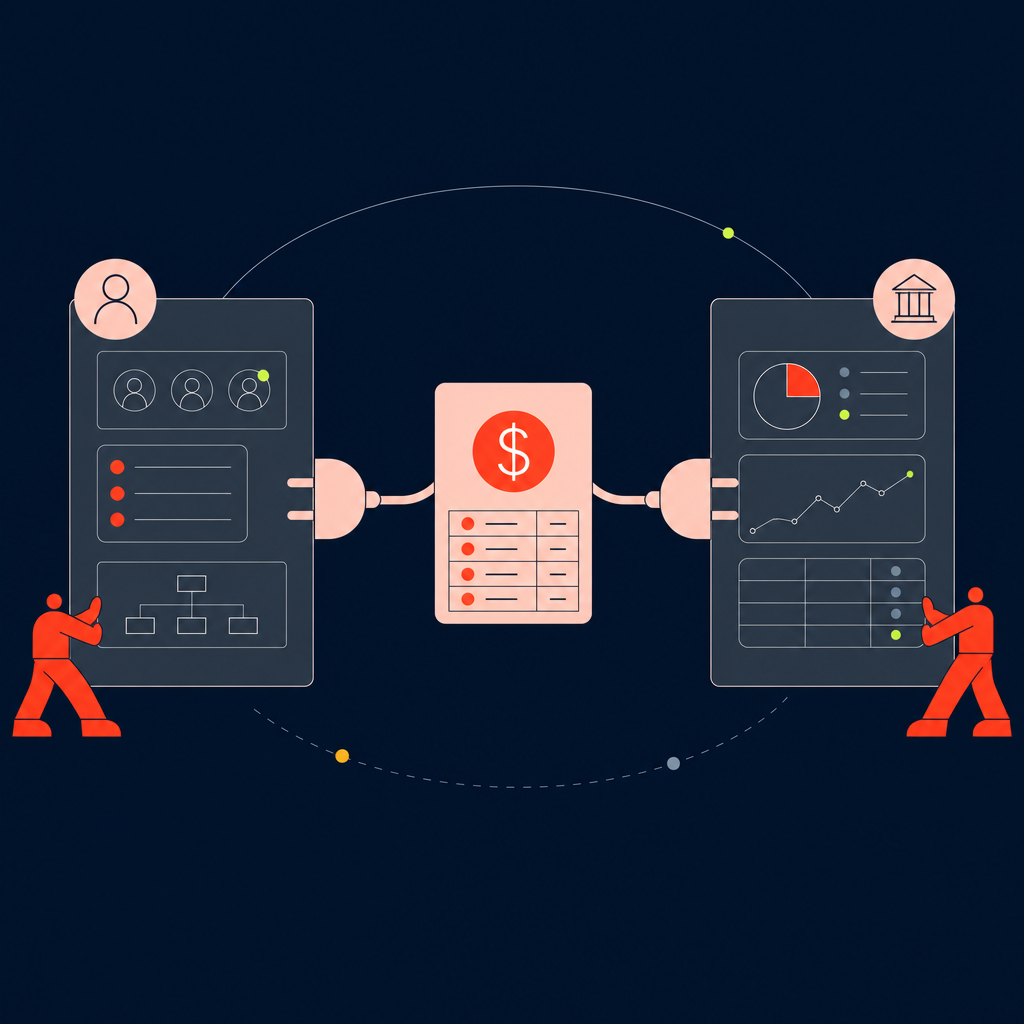
Payroll integration is the automated, two-way connection between an organization's core HR software, time-tracking tools, financial ledger, and local payroll engines. By establishing a direct data pipeline across these platforms, integration eliminates manual spreadsheet re-entry, reduces human payment errors, speeds up processing timelines, and ensures payroll figures reflect live organizational changes instantly.
When organizations rely on disconnected software, human resource teams must manually export employee details, work hours, and compensation adjustments into flat files. Payroll managers then reformat these spreadsheets to match the specific file formats required by regional payout engines. This manual process creates operational friction and exposes sensitive financial data to security risks across several areas:
- Increased rate of manual data entry errors during peak pay periods.
- Delayed payment execution due to missing or reformatted payroll files.
- Fragmented workforce visibility into total global compensation expenditures.
- Lack of continuous audit trails between human resource edits and payroll output.
Automated synchronization removes this manual intermediary work by creating continuous communication channels between systems. When a manager updates an employee salary in the primary human resource information platform, that change updates across time-tracking systems and payroll engines without manual human intervention. Consequently, gross compensation calculations remain accurate across all regional divisions without requiring monthly data entry audits.
Financial operations benefits directly from this connected approach. Instead of waiting days after a payroll run to receive balance reports, accounting software ingests post-payroll transaction records directly into the general ledger. This direct data flow gives financial controllers real-time oversight into labor costs, accruals, and tax liabilities across every operating jurisdiction.
As companies expand across international borders, automated synchronization becomes essential for operational control. Managing disparate payroll engines across multiple jurisdictions using manual file transfers leads to missed payment deadlines and statutory compliance failures. Connected infrastructure provides a central control layer that keeps global payroll accurate, timely, and compliant with local regulations.

The operational foundation of connected payroll data
The operational foundation of connected payroll data relies on standardized data schemas, automated API endpoints, real-time validation rules, and unified reconciliation protocols. Together, these structural elements transform raw HR input into standardized payroll calculation instructions, enabling financial systems and regional payment vendors to process accurate disbursements without requiring manual intermediate file manipulation.
A core element of this technical foundation is the standardized data schema. Disparate software applications store worker information in varying formats, using different labels for field entries like bonus pay, hourly rates, or local tax identification numbers. Standardizing these data fields into a uniform structure ensures that data transmitted from human resource software translates accurately into local gross-to-net payroll engines.
Modern connected architectures replace periodic file uploads with application programming interfaces that push and pull data instantly. Rather than transferring batched files over secure file transfer protocols at the end of a pay period, event-driven webhooks trigger updates immediately whenever HR records change. For instance, when an employee updates bank details, the system updates the payout engine immediately, preventing failed bank transfers on payday.
To maintain financial accuracy, connected architectures incorporate these key operational components:
- Automated validation engines that verify worker classification and tax fields before data reaches regional execution engines.
- Bidirectional general ledger mapping that assigns labor costs to specific accounting departments automatically.
- Unified time-tracking connectors that convert raw clock-in records directly into statutory overtime rates.
- Local statutory compliance hooks that automatically adjust tax withholdings based on local legislation changes.
By combining standardized data schemas, automated programming interfaces, and built-in validation checks, companies establish a predictable operational foundation. This structural stability minimizes pay-cycle delays, protects audit readiness, and lowers administrative overhead for both finance and human resource teams.
Key terminology in payroll integration
Key terminology in payroll integration encompasses the core technical and functional definitions required to build automated global payroll pipelines. Mastering concepts like gross-to-net processing, API Webhooks, multi-currency ledger mapping, and statutory compliance hooks allows finance and HR leaders to evaluate platform capabilities, diagnose data bottlenecks, and design compliant multi-region architectures.
To evaluate platform capabilities and technical specifications, finance and operations teams should familiarize themselves with these fundamental concepts:
- Gross-to-Net (G2N) engine: The computational software component that takes total worker earnings and subtracts statutory taxes, social contributions, and voluntary deductions to arrive at net payout figures.
- Webhook event trigger: An automated system alert that notifies connected software applications instantly when a specific event occurs, such as a salary increase or worker address change.
- General Ledger (GL) mapping: The process of linking specific payroll expense items directly to corresponding account codes within an enterprise resource planning system.
- Point-to-point integration: A direct custom software connection between two standalone applications that lacks a central data normalization layer.
- Land date: The guaranteed date on which funds land in an employee bank account, accounting for regional banking holidays and local clearing house clearance times.
- Statutory compliance engine: A specialized software rules set that automatically applies regional tax laws, labor codes, and mandatory benefit withholdings based on worker location.
Understanding these terms enables decision-makers to distinguish between superficial file-transfer connections and deep software integrations. It also helps technical teams communicate effectively with external software providers during system evaluation and deployment, ensuring the business maintains ownership of its underlying operational architecture.
Wondering how payroll integrations work at enterprise scale in your countries?
A Papaya specialist can map this to your actual workforce instead of the general case.
Why SMB payroll integrations break at enterprise scale
SMB payroll integrations break at enterprise scale because simple point-to-point connections cannot handle multi-country statutory variations, varied currency ledgers, or custom organizational hierarchies. Built for single-jurisdiction environments, lightweight tools rely on manual file uploads and basic API links that shatter under complex European labor rules, fragmented tax jurisdictions, and enterprise volume.
Point-to-point API brittleness versus unified data layers
Lightweight payroll solutions designed for small businesses rely primarily on point-to-point connections between individual software tools. When a company operates in a single country with two or three applications, these simple connections function adequately. However, as organizations expand into multi-country operations, adding regional vendors creates a complex network of fragile connections that require constant manual maintenance.
When an enterprise attempts to scale using point-to-point connections, every new country or payout partner requires a distinct custom interface. If an HR platform updates its data fields, every connected point-to-point link risks breaking simultaneously. Operations teams spend dozens of hours every pay cycle manually verifying data transfers, correcting dropped fields, and re-entering missing information across disconnected platforms.
In contrast, enterprise architectures use a unified data layer that normalizes worker information before sending it to local execution engines. Instead of managing dozens of individual software links, the central system converts all internal HR inputs into a single standardized data stream. When evaluating platform architecture, growing businesses often compare standalone point-to-point setups against centralized models by examining what global payroll providers offer to support multi-country scale.
Handling multi-currency and complex local labor compliance
Small business tools struggle with multi-currency management and regional labor laws. International operations require handling multiple local currencies, managing fluctuating exchange rates, and adhering to strict regional banking regulations. Simple payout tools often apply static conversion rates or fail to account for local banking cut-off times, resulting in incorrect payment amounts or delayed deposits.
Compliance rules in complex international markets like Europe present another major obstacle for basic software connectors. European labor regulations require precise calculations for collective bargaining agreements, regional severance accruals, and statutory working time limits. When basic point-to-point tools attempt to process these complex pay structures, they frequently miscalculate overtime or omit required local tax withholdings.
The contrast between lightweight integrations and enterprise data layers becomes evident across key operational dimensions:
- Data flow architecture: Point-to-point tools rely on fragile direct connections, whereas enterprise layers use a single standardized schema.
- Currency management: Lightweight software uses basic single-currency batching, while enterprise systems support multi-currency calculations and automated foreign exchange management.
- Statutory compliance: Basic tools require manual compliance checks per country, while enterprise software applies localized statutory rules automatically.
- Financial reconciliation: Point-to-point tools demand manual general ledger adjustments, whereas unified systems offer automated general ledger mapping.
Connecting enterprise HRIS to global payment engines
Connecting enterprise HRIS platforms to global payment engines requires pre-built, certified connectors that synchronize employee records directly with execution systems like Workday, SAP, or NetSuite. These connections eliminate intermediate spreadsheets, automatically convert currency requirements, and feed fully reconciled transaction data back into general ledgers to ensure complete financial control.
Enterprise organizations require direct software bridges between their central human capital management suites and regional payroll execution channels. When an organization uses Workday, SAP, or NetSuite as its core system of record, payroll data must flow back and forth without requiring manual file conversions. Certified connectors ensure that changes made in the central HR software reflect immediately in local payment calculations.
Modern platforms like Papaya Global address this operational requirement by offering certified integrations with leading enterprise systems. Operating as a unified global workforce payments platform, the system ingests data from central HRIS platforms, normalizes it across 180+ countries, and routes execution instructions to verified local payout networks. This eliminates manual batch adjustments and reduces payment error rates across international divisions.
Unifying employee and contractor payment workflows
Certified enterprise connectors provide several structural advantages for global payroll execution:
- Automated bidirectional synchronization between central HR records and regional payout engines.
- Continuous validation of employee tax, banking, and statutory data prior to payout execution.
- Real-time posting of post-payroll ledger entries back to central financial applications.
Managing a global workforce also involves managing hybrid staffing structures composed of direct employees and independent contractors. Integrating a dedicated contractor payment platform into the central HRIS allows finance teams to process vendor invoices alongside regular employee payroll. This unified tracking prevents payment duplication, simplifies tax reporting, and provides finance leaders with clear visibility into total international labor expenditures.
Direct integration between enterprise systems and payment engines delivers complete financial transparency while protecting the overall talent experience by guaranteeing payments arrive on the intended land date. Once payments are executed locally, post-payroll data flows directly back into the enterprise resource planning platform. Financial controllers gain immediate visibility into total payroll expenses, employer tax liabilities, and exchange rate impacts without waiting for manual month-end reconciliations.

Transitioning to a unified global payroll architecture
Transitioning to a unified global payroll architecture involves auditing existing point-to-point integrations, consolidating regional payroll vendors, establishing standardized data models, and implementing certified HRIS connectors. This systematic roadmap replaces fragmented legacy workflows with a scalable infrastructure that guarantees audit readiness, protects workforce visibility, and lowers overall administrative costs across all operating regions.
The transition process begins with a complete audit of an organization's existing software stack and data flows. Leadership teams must identify all manual touchpoints, spreadsheet transfers, and custom scripts currently used to move data between HR platforms and local payroll providers. Documenting these operational vulnerabilities helps prioritize which regional connections require immediate standardization.
Next, organizations should consolidate disparate regional vendors into a standardized payments infrastructure. Selecting a unified platform allows enterprises to replace dozens of localized software contracts with a single operational layer. Standardizing data structures across all operating regions ensures that worker records, tax inputs, and payout files follow identical compliance protocols worldwide.
To execute a successful transition, project leaders should adopt a structured operational roadmap:
- Audit existing HRIS, time-tracking, and general ledger connections to pinpoint manual processes.
- Standardize global chart-of-accounts entries and compensation definitions across all international entities.
- Deploy certified connectors between central enterprise resource software and the primary payment engine.
- Establish automated reconciliation rules to verify gross-to-net calculations prior to funds disbursement.
- Conduct testing across all operating jurisdictions before decommissioning legacy point-to-point links.
Upgrading from brittle point-to-point connectors to a unified global payroll architecture transforms payroll from a high-risk operational burden into a predictable, automated process. Organizations that complete this transition gain full financial control, eliminate costly manual reconciliation cycles, and guarantee timely, accurate payments for their workforce globally.
Frequently asked questions
What is payroll integration and how does it work?
Payroll integration is the automated connection between core human resource platforms, time-tracking systems, financial accounting software, and local payout providers. It functions by transmitting employee records, working hours, and salary adjustments directly between systems using application programming interfaces and standardized data formats. This continuous automated flow eliminates manual spreadsheet re-entry, reduces calculation errors, speeds up processing, and ensures financial ledgers reflect accurate labor costs automatically after every pay cycle.
What are the main limitations of standard payroll systems for global payments?
Standard payroll systems are typically built for single-country operations and rely on local statutory rules and single-currency processing. When used for multi-country global payments, basic systems struggle with foreign exchange rate variations, complex international banking regulations, and localized statutory compliance requirements. They often rely on brittle point-to-point connections and manual file uploads, which lead to high error rates, delayed payments, and significant reconciliation overhead for finance teams.
How does the international payroll process handle multiple currencies and regulations?
International payroll processes manage multiple currencies and local regulations by routing standardized worker data through dedicated statutory compliance engines and localized banking rails. The system automatically converts gross compensation figures into local net payouts, calculates regional tax and social security obligations according to local laws, and executes payments in local currency. Automated synchronization ensures that foreign exchange rates are locked in accurately and payment land dates are met across all jurisdictions.
Which HR software is best for multi-country global payroll?
The best HR software for multi-country global payroll is an enterprise human capital management platform, such as Workday, SAP, or NetSuite, paired with a dedicated global payments infrastructure like Papaya Global. While core HR platforms maintain employee records and organizational structures, connecting them to a unified global payroll layer ensures pre-built integration, multi-currency processing, and automated statutory compliance across more than 180 countries without manual work.
The next step is payroll integrations at enterprise scale in your own setup
Bring your countries, worker mix and payment cycles to a Papaya specialist and get a straight answer on what changes.