
What Is a Contractor Payment Platform?
A contractor payment platform is specialized software for managing and sending payments to independent contractors, not full-time employees. Contractor pay can look simple until it crosses currencies, countries, invoice cycles, approval layers, and compliance checks; then every delay becomes a trust problem.
Traditional payroll is built around employees: fixed pay cycles, employment records, tax withholding, benefits, and local payroll rules. Contractor payments work differently. Contractors are usually paid against invoices, statements of work, milestones, retainers, or usage-based agreements. They may work in different countries, bill in different currencies, and expect payment terms that reflect their cash-flow needs rather than an employer’s payroll calendar.
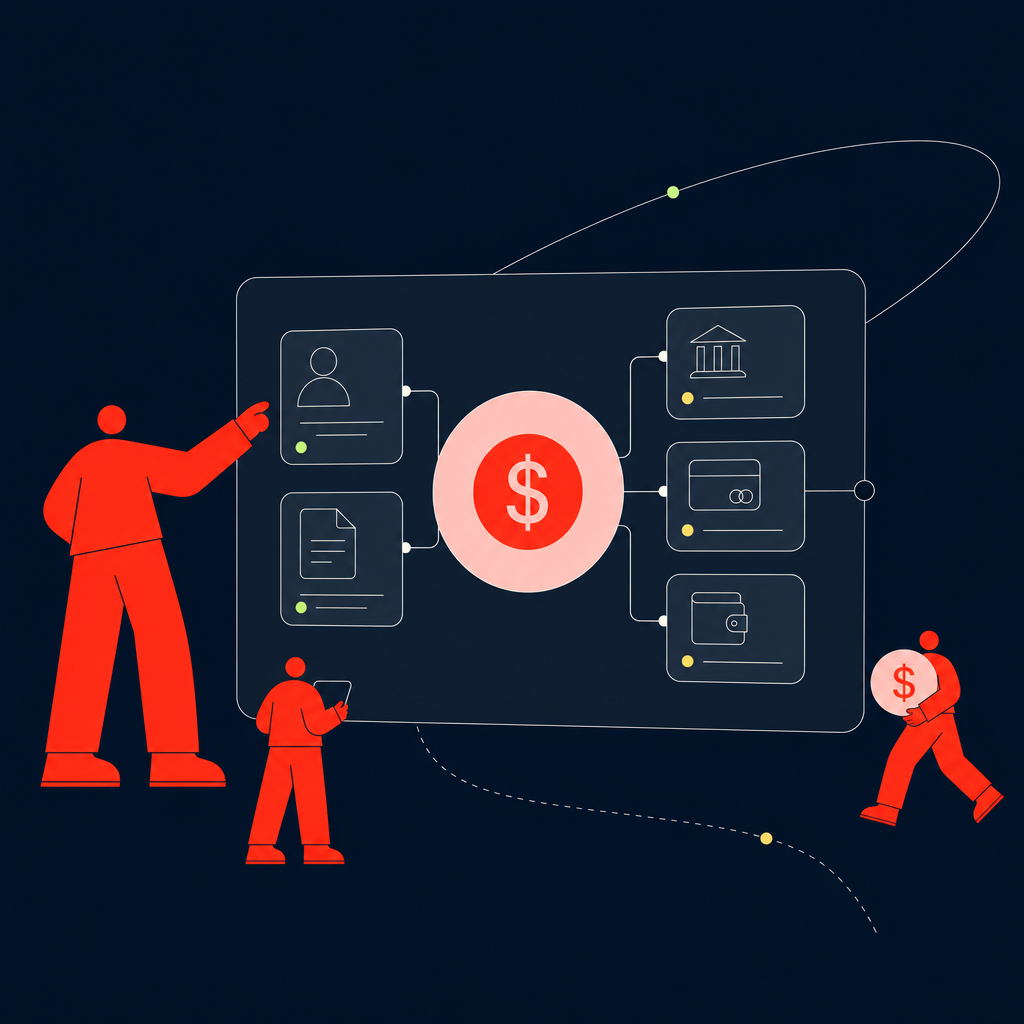
A contractor payment platform sits between the business and that distributed contractor base. Its job is to bring structure to the full payment lifecycle, not simply push money out of an account. In practice, that lifecycle usually includes:
- Collecting contractor details during onboarding
- Storing payment methods and tax or compliance information
- Receiving, approving, and tracking invoices
- Converting currencies when needed
- Sending funds to contractors through payment rails
- Giving finance teams visibility into payment status
- Keeping records for audit readiness and financial control
The distinction matters because paying a contractor is different from reimbursing a vendor or running employee payroll. Contractors are people whose continued work depends on reliable payment, but they are not employees inside the payroll system. When payment operations are treated as a side process, the business inherits avoidable friction: manual approvals, unclear status updates, missed land dates, and finance teams spending time answering the same anxious payment questions.
A good contractor payment platform creates one controlled process for those moving parts. It gives the business a cleaner way to manage contractor obligations while giving contractors a more predictable talent experience. That does not remove the need for compliant classification, contract terms, or local review where needed. It does give finance and operations teams a system designed for the way contractor relationships actually work.

The Challenges of Traditional Contractor Payments
Traditional contractor payments break down when invoices, spreadsheets, banking portals, currency tools, and email threads all carry separate pieces of the process. What starts as a payment task turns into an ownership gap, weakening workforce visibility right when contractors need certainty about amount, status, and land date.
For a finance team, the visible pain is usually the late payment message. The deeper issue is fragmentation. One team approves the invoice, another prepares the payment file, a bank or payment provider moves the funds, and someone else tries to explain where the money is. When each step sits in a different system, nobody owns the whole payment journey.
That lack of ownership creates business risk in several ways:
- Contractors lose confidence in the company’s ability to pay on time.
- Finance teams lose time chasing statuses across systems.
- Managers lose capacity when contractors pause work.
- The business loses audit readiness when payment records live in scattered tools.
- Forecasting becomes harder when payment timing depends on manual workarounds.
A contractor may tolerate one late payment if the explanation is clear and the issue is fixed. Repeated uncertainty is different. For independent workers, payment reliability is part of the working relationship. If a platform or process cannot show where funds are, when they will land, and who is accountable, the company’s contractor program starts to feel unstable.
Why Payment Delays Happen
Payment delays usually happen because too many handoffs sit between approval and delivery. The invoice may be correct, the funds may be available, and the intent may be sound, yet the contractor still waits because the process depends on disconnected approvals, manual file uploads, banking cutoffs, or third-party processing steps.
The most common delay points are ordinary enough to be underestimated. An invoice waits for the right approver. A payment batch misses an internal deadline. A bank file has formatting errors. Currency conversion happens later than expected. A contractor’s payment method is incomplete, but nobody catches it until after the run begins.
Once funds leave the company account, the problem can become harder to manage. If the payment path relies on several outside parties, the finance team may know that money was sent without knowing where it is now. That creates the worst possible contractor communication: “We paid it” from the company’s point of view, while the contractor sees nothing in their account.
The operational lesson is simple: speed matters, and visibility matters just as much. If finance cannot see the payment state, it cannot manage expectations. If it cannot manage expectations, a technical payment delay becomes a relationship issue.
The Hidden Costs of International Payments
International contractor payments carry hidden costs because the invoice amount is only part of the story. Currency conversion, intermediary deductions, receiving-bank charges, payment method limits, and timing uncertainty can all change the contractor’s experience, even when the company believes it paid the correct amount.
The hard part is that those costs are not always obvious at approval time. A contractor may invoice in one currency, the company may fund in another, and the receiving account may settle in a third. If the payment path passes through several entities, the final amount and arrival time can become difficult to predict without a system built for cross-border payment control.
For businesses with a large contractor base, those small frictions compound. Finance teams may start pre-funding payment cycles earlier than they want, just to protect against delays. Managers may ask for exceptions for critical contractors. Contractors may request alternative payment methods. Each workaround solves one case while making the overall process harder to govern.
The hidden cost is bigger than fee leakage: it is the loss of financial control. A company that cannot clearly see payment status, expected land date, and settlement outcome is forced to manage by escalation. Modern contractor payment operations should work the other way, with the system making exceptions visible before they become urgent.
Key Terms for Contractor Payments
Contractor payment terminology pulls from banking, payroll, compliance, and procurement, so the topic can sound more complicated than it is. Once the core vocabulary is clear, it becomes easier to compare platforms, identify weak controls, and decide whether a payment process is built for scale.
Here are the terms that matter most when evaluating a contractor payment platform:
- Contractor: An independent worker or business entity engaged under a contract rather than an employment relationship.
- Invoice: A request for payment that states the work performed, amount due, currency, payment terms, and relevant identifiers.
- Payment terms: The agreed timing for payment, such as payment on receipt, payment after approval, or payment within a set number of days.
- Payment rail: The infrastructure used to move funds from payer to recipient. Rails can vary by country, currency, speed, and settlement model.
- Land date: The date funds are expected to arrive in the contractor’s account. This is the date contractors care about most.
- Settlement: The point at which funds have completed movement through the payment path and are credited according to the receiving method.
- Foreign exchange: The conversion of one currency into another as part of the payment process.
- Bulk payment: A single organized payment run that sends funds to multiple contractors at once.
- Pre-funding: Moving money into a provider-controlled account before payments are released. This can help some workflows but can also reduce flexibility.
- Wallet: A stored balance inside a payment system. Wallet models can add another layer between company funds and contractor receipt.
- Compliance: The set of controls used to support correct contractor engagement, payment records, tax documentation, and audit readiness.
- Payment visibility: The ability to see where money is, what stage it is in, and when it is expected to arrive.
These terms are not academic. They shape buying decisions. A platform that promises fast payments but cannot explain its payment rails may not give finance enough control. A tool that supports bulk payments but requires heavy pre-funding may still create cash-flow tension. A provider that shows invoice approval but not fund movement may help operations while leaving contractors in the dark.
The vocabulary also helps separate payment execution from the surrounding workflow. Onboarding, approvals, documents, and reporting matter, but payment delivery is its own discipline. If the contractor’s money does not arrive when expected, the rest of the workflow cannot fully compensate for that failure.
How Modern Payment Platforms Guarantee Delivery
Modern platforms improve contractor payment delivery by reducing handoffs, centralizing status, and designing around the contractor’s land date rather than the company’s internal send date. A real delivery guarantee depends on payment infrastructure, clear accountability, compliant controls, and enough visibility for finance to act before contractors escalate.
That distinction between “payment software” and payment operations matters. Many tools can collect invoices and initiate payments. Fewer can explain what happens after initiation with enough precision for finance to manage contractor expectations. A mature contractor payment platform should treat delivery as a controlled process, not a message passed into a black box.
The mechanics usually come down to four capabilities:
- Clean intake: Contractor data, invoice details, payment method, currency, and compliance records are captured before the payment run.
- Controlled approval: Finance and business approvers can confirm obligations without losing the audit trail.
- Reliable execution: The platform moves funds through known payment paths with clear timing rules.
- Transparent tracking: The business can see status changes and act on exceptions before contractors have to chase.
That structure changes the tone of payment operations. Instead of telling contractors that a payment was “processed,” finance can work from a more useful standard: when the money is expected to land, what might prevent it, and who is responsible if it does not.
Owned Payment Rails vs. Third-Party Hops
Owned or directly controlled payment infrastructure gives a platform more accountability over timing, status, and exception handling. By contrast, a process built on repeated third-party hops can fragment responsibility. Each extra handoff may be reasonable on its own, but together they can make the full payment path harder to govern.
The business question is not whether a provider uses outside financial institutions at all. Most payment systems connect to regulated and licensed financial infrastructure in some way. The question is whether the platform owns enough of the payment process to absorb responsibility and give finance a dependable answer when timing matters.
A weak payment chain often sounds like this:
- The company sent the funds.
- The platform marked the batch as paid.
- A banking partner is processing the transfer.
- Another intermediary may be involved.
- The receiving bank has not credited the contractor yet.
Every line may be true, but none gives the contractor confidence. Worse, finance may have no useful action to take. The company has paid, the contractor has not received, and the provider cannot give a precise answer.
A stronger model is organized around accountability. The platform should define what it controls, what it guarantees, what exceptions can occur, and how those exceptions are communicated. That is the basis for better workforce visibility and stronger trust with contractors who judge the company by whether payment arrives when promised.
Making On-Time Bulk Payments Possible
Bulk payments work when the platform can turn many individual obligations into one governed payment run without losing detail at the contractor level. Finance needs the efficiency of one process, while each contractor needs the confidence that their specific payment amount, currency, method, and land date are correct.
That balance is difficult to maintain with spreadsheets and banking portals. A file can show a total payment amount, but the business still needs to know which invoices were approved, which payments were released, which contractors are pending, and which transfers need attention. When those details sit outside the payment tool, errors travel fast.
A modern bulk-payment workflow should make the run easy to control before, during, and after release:
- Before release: Validate contractor details, payment methods, invoice approvals, currencies, and payment amounts.
- During release: Show payment status in terms finance and contractors can understand.
- After release: Store records that support reconciliation, compliance, and audit readiness.
The best systems also reduce dependence on pre-funding where that model creates cash-flow strain. Pre-funding can be useful in some payment structures, but it should not become a workaround for weak payment visibility. If money sits in a vendor-controlled balance while contractors still wait, the business has neither full control nor a good contractor experience.
For high-contractor organizations, the operational goal is not simply to pay many people at once. It is to pay many people with predictable timing, clear records, and fewer escalations. That is the point where contractor payment shifts from administrative support to financial infrastructure.

How to Choose the Right Contractor Payment Platform
The right contractor payment platform helps your team protect payment timing, compliance, audit readiness, and contractor trust in one governed process. Start by judging whether the tool can own the payment outcome, not just organize the payment request or make approvals look cleaner.
A useful buying framework begins with the problem you are trying to remove. If contractors are leaving because payments arrive late, a prettier approval workflow is not enough. If finance cannot see where funds are after release, invoice automation alone will not solve the issue. If the company operates across countries and currencies, payment delivery needs to be designed for that complexity from the start.
Use these criteria to evaluate the platform:
- Payment accountability: Can the provider explain who owns each stage of the payment path?
- Land-date clarity: Does the platform show when funds are expected to reach the contractor?
- Bulk-payment control: Can finance pay many contractors without losing contractor-level detail?
- Currency support: Can the workflow handle currency conversion without surprise confusion for contractors?
- Compliance records: Does the system retain the documents and approvals needed for audit readiness?
- Exception handling: Can the team see and resolve issues before they become contractor escalations?
- Contractor experience: Can contractors understand status without relying on manager or finance follow-up?
- Financial control: Does the model avoid unnecessary cash lockup where possible?
For a broader operational view of contractor engagement, it can help to pair payment evaluation with a practical guide on how to pay contractors, because payment execution is only one part of a compliant contractor program.
Papaya Global is a global workforce payments platform for payroll, employer of record, and contractor management across 180+ countries. If you are comparing systems, review whether the provider’s payment features match the level of control your contractor model requires, especially around visibility, liability, and land-date commitments.
The final decision should come back to the opening issue: contractor payment looks simple until it becomes cross-border, high-volume, and business-critical. At that point, the company needs more than a place to upload invoices. It needs a contractor payment platform that gives finance control, gives contractors certainty, and protects the working relationship from preventable payment friction.
Frequently asked questions
Can my US-based company pay a foreign contractor?
Yes, a US-based company can pay a foreign contractor, but it should treat the arrangement as a structured cross-border contractor relationship rather than an informal transfer. The company needs clear contract terms, correct payment details, classification review where appropriate, and records that support compliance and audit readiness.
What are the common challenges when paying international contractors?
The common challenges are payment delays, unclear land dates, currency conversion issues, missing contractor details, weak status visibility, and scattered approval records. These problems become more serious when finance cannot see where funds are after release or cannot explain to contractors when payment will arrive.
What’s the best payment term to offer a contractor to keep them happy?
The best payment term is one the company can honor consistently. Contractors usually value predictability as much as speed, so avoid promising a fast timeline if approvals, funding, or payment rails cannot support it. Clear terms, visible status, and reliable land dates do more for trust than vague promises.
How quickly do I have to pay a contractor invoice?
You should pay according to the contract and the approved invoice terms. If the agreement says payment is due after approval or within a defined number of days, finance should build the workflow around meeting that commitment. The key is to make approval timing and payment timing clear before the invoice is submitted.
How can I pay multiple international contractors at once?
You can pay multiple international contractors through a bulk-payment workflow that validates contractor details, invoices, currencies, approvals, and payment methods before release. A contractor payment platform helps by organizing many payments into one controlled run while preserving individual records for reconciliation, compliance, and contractor support.
The next step is a contractor payment platform in your own setup
Bring your countries, worker mix and payment cycles to a Papaya specialist and get a straight answer on what changes.