
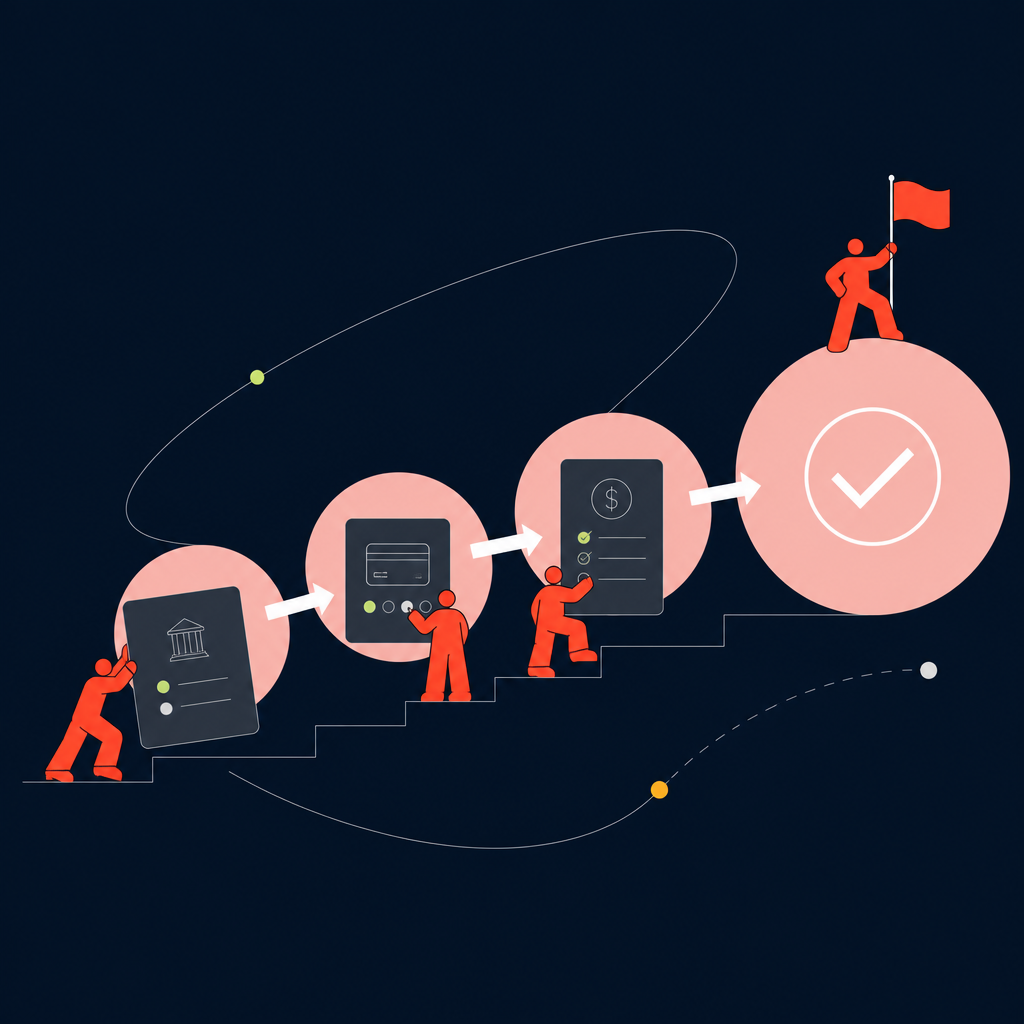
By the end of this guide, you will have a repeatable operating model to execute multi-country contractor payouts on time without losing days to manual invoicing, currency conversions, and payment status inquiries.
The high cost of manual contractor payout cycles: Operational friction
Manual contractor payout cycles inflate corporate costs by trapping finance teams in repetitive data verification, fragmented banking portals, and uncoordinated foreign exchange (FX) conversions. As international contractor volume grows beyond 150 workers, manual administrative overhead scales exponentially, triggering missed payment deadlines, hidden intermediary bank fees, and severe accounting reconciliation delays across finance operations.
Managing global contractors through spreadsheets and direct bank wires forces finance managers to navigate disparate payment rules for every country. When companies expand their international headcount, manual operations break down under the weight of recurring intake, invoice validation, and individual wire setups.
+-----------------------------------------------------------------------+
|                       MANUAL PAYOUT BOTTLENECK                        |
|                                                                       |
|  [ Multiple Portals ] ---> [ Manual FX Routing ] ---> [ Delayed Sync ] |
|  - Scattered invoices      - Hidden bank fees         - Ledger gaps   |
|  - Unverified IBANs        - Unpredictable rates      - Support chaos |
+-----------------------------------------------------------------------+
Finance teams spend hours re-keying banking details and chasing missing tax forms. A recent corporate finance market analysis highlights how global enterprise clients actively prioritize tailored digital tools that bring transparency and efficiency to complex transactional workflows. Without structured automation, finance operations suffer from unpredictable FX markups, delayed payout delivery, and endless contractor support tickets.

Prerequisites for automating cross-border payments
Before setting up automated payment workflows, you need to gather specific operational access and data foundations. Automating cross-border contractor payouts requires five operational components: verified beneficiary bank details, centralized worker tax documentation, standardized payment terms, multi-currency funding bank access, and designated internal approval hierarchies. Establishing these prerequisites ensures your automated system processes transactions without unexpected compliance holds or banking rejections.
Deploying specialized software requires proper technical and organizational foundations. Modern mass payment solutions rely on pre-configured approval rules and standardized data formats to eliminate human error across recurring billing cycles.
Gather the following prerequisites before initiating your payment pipeline setup:
- Verified contractor bank records: Local banking details, Society for Worldwide Interbank Financial Telecommunication (SWIFT) codes, International Bank Account Numbers (IBAN), and intermediary bank routing information collected directly from workers.
- Compliance and tax clearance: Signed contractor agreements, identity verification documents, and completed country-specific tax forms, such as Form W-8BEN for non-U.S. workers.
- Structured payment schedules: Clear payment terms, billing cut-off dates, and approval rules aligned across departments.
- Multi-currency funding accounts: Dedicated corporate accounts capable of holding and disbursing funds in key operational currencies.
- Role-based system access: Defined permissions for finance managers, operational approvers, and system administrators.
Having these foundations ready prevents integration delays and ensures immediate operational efficiency.
Step 1: Standardize onboarding, account verification, and invoice collection
Standardizing onboarding, account verification, and invoice collection requires a self-service portal where international contractors submit verified tax documents, digital invoices, and banking data directly. Automated checks validate account structures, verify Know Your Customer standards, and route approved invoices into your payment pipeline, eliminating manual entry errors and compliance holds before processing.
Implement self-service worker intake and KYC verification
Manual data entry remains a primary cause of failed international transfers. When contractors input their banking details into a secure self-service portal, real-time validation checks verify local clearing codes, IBAN structures, and SWIFT formats before saving the record, protecting the talent experience.
Automated Know Your Customer (KYC) routines cross-reference worker identity documents against global watchlists. This automated verification eliminates back-and-forth email threads and ensures every active contractor meets legal compliance standards prior to invoice processing.
Automate invoice validation and approval routing
Paper invoices and unformatted PDFs create administrative bottlenecks across corporate finance. Implementing standardized digital invoice templates requires contractors to submit line-item details, currency specifications, and project codes directly through the platform.
+-----------------------------------------------------------------------+
|                    AUTOMATED INVOICE WORKFLOW                         |
|                                                                       |
|  [ Self-Service Intake ] -> [ Automated KYC Check ] -> [ Approval ]   |
|  - Contractor inputs IBAN    - Instant SWIFT/IBAN check - Pre-set rules |
|  - Uploads tax forms         - Watchlist screening      - Direct route|
+-----------------------------------------------------------------------+
Once submitted, the platform routes invoices automatically to designated project managers based on pre-set spending thresholds. For more details on structured workflows, consult our contractor payment platform guide. Automated matching verifies that invoice amounts match approved contract terms, flagging mismatches immediately for internal review.
Step 2: Group payouts and set up multi-currency funding rails
Grouping payouts and setting up multi-currency funding rails requires consolidating approved contractor invoices into batch payment runs organized by currency or region. Funding these disbursements through local payment networks rather than international wires allows teams to lock in foreign exchange rates before execution, eliminating intermediary correspondent bank deductions and ensuring predictable settlement across target countries.
Consolidate invoices into synchronized payment groups
Processing contractor payments individually leads to prohibitive wire fees and administrative clutter. Grouping verified invoices into batch payment runs allows Finance to authorize hundreds of international payments in a single action.
Payment groups can be organized by funding frequency, geographical region, or currency type. For comprehensive batch processing strategies, see our guide on mass payments explained.
Wondering how cross-border payment operations plays out in your countries?
A Papaya specialist can map this to your actual workforce instead of the general case.
+-----------------------------------------------------------------------+
|                      BATCH PAYMENT GROUPING                           |
|                                                                       |
|  [ Invoices Approved ] ---> [ Grouped by Currency ] ---> [ Bulk Wire ] |
|  - 200+ global invoices     - EUR, GBP, USD rails       - Single transfer|
|  - Pre-screened details     - Fixed FX lock-in          - Clear audit  |
+-----------------------------------------------------------------------+
Consolidating payouts streamlines authorization chains, giving finance executives workforce visibility and complete control over total cash outlay before funds leave corporate treasury accounts.
Establish local currency routing to curb FX leakage
Sending cross-border payments through traditional wire transfers often routes funds through multiple correspondent banks. Each intermediary deducts processing fees (typically 15 to 40 USD per transfer) and applies uncompetitive exchange rates, reducing the net amount delivered to the contractor.
Establishing local payment rails allows your organization to fund payments in primary corporate currencies while delivering exact local currency amounts to destination bank accounts. Locking in FX rates at the moment of batch approval eliminates settlement drift and protects your operating margins.
Step 3: Execute bulk payments with automated reconciliation and tracking
Executing bulk contractor payments requires authorizing a single funding transfer that automatically disburses funds to international workers through local clearing networks. Automated platforms track transfer statuses in real time, guarantee precise land dates, and synchronize transaction logs directly with your general ledger, eliminating manual month-end reconciliation while preserving complete financial control and audit readiness.
Execute single-funding bulk disbursements
Executing batch payouts through a unified platform simplifies treasury management. Rather than executing dozens of international wire transfers across separate banking portals, Finance initiates a single funding transfer to cover the entire payout run.
The platform automatically splits the bulk funding pool and routes funds across local clearing networks to individual workers. Dedicated payout platforms, such as Papaya Global, deliver clear visibility into payment execution status, ensuring contractors receive accurate payments on scheduled land dates.
For broader workforce visibility across global operations, enterprise organizations like South Pole consolidated 27 legal entities and 15 payroll providers into one system, saving more than 600 hours of manual work per week and about EUR 417K annually.
Synchronize transaction data with general ledger software
Manual reconciliation at month-end creates operational strain and delays financial reporting. Modern corporate payment solutions automatically sync line-item payment details, exchange rates, and transaction fees directly with your Enterprise Resource Planning (ERP) software.
+-----------------------------------------------------------------------+
|                     AUTOMATED RECONCILIATION                          |
|                                                                       |
|  [ Single Payout Run ] ---> [ Real-Time Tracking ] ---> [ ERP Sync ]  |
|  - Local clearing delivery - Status notifications     - Ledger update |
|  - Exact net amounts       - Delivery verification    - Zero manual   |
+-----------------------------------------------------------------------+
Automated matching assigns transaction reference numbers to corresponding invoices, updating payment statuses in real time. Finance teams gain immediate audit readiness without manually reconciling individual bank statements against accounting software.
Troubleshooting cross-border payment exceptions and FX drift
Fixing payout exceptions ensures your operating workflow runs smoothly month after month. Resolving cross-border payment exceptions requires systematic diagnostic steps to identify whether a failure stems from invalid account data, intermediary bank holds, or FX rate slippage. Establishing clear protocols allows Finance to correct bank details, re-route stuck transfers, and reconcile currency variances without missing payout deadlines.
Cross-border payment disruptions typically arise from administrative errors, regulatory holds, or shifting currency valuations. Following a structured diagnostic routine helps identify root causes fast:
- Identify the exception type: Determine whether the failure involves a rejected transfer, an intermediary bank hold, or a value-date discrepancy.
- Verify beneficiary account parameters: Check for typographical errors in SWIFT codes, local account numbers, or beneficiary legal names. Mismatched beneficiary names trigger immediate compliance blocks at receiving banks.
- Audit FX rate variance: Compare the execution exchange rate against the rate locked during batch approval. FX drift occurs when transfers sit pending past their rate lock window, requiring secondary authorization.
- Trace correspondent bank paths: For delayed international wires, request a SWIFT MT103 tracking document from the processing bank to locate where funds sit within the correspondent network.
- Re-route failed disbursements: Update corrected banking data in the platform self-service module and trigger an immediate single-item retry.
+-----------------------------------------------------------------------+
|                    EXCEPTION RESOLUTION ROUTINE                       |
|                                                                       |
|  [ Transfer Failed ] -> [ Check SWIFT / Name ] -> [ Issue MT103 ]     |
|  - System alert        - Verify against bank rec   - Trace hold point |
|  - Isolate payment     - Prompt worker update      - Re-route funds   |
+-----------------------------------------------------------------------+
Establishing automated alerts for payment exceptions guarantees that minor data issues are resolved before they compound into systemic payroll delays.

Achieving true Finance control over multi-country contractor payouts
Achieving full financial control over multi-country contractor payouts requires consolidating worker intake, local payment rails, and ledger synchronization into a single automated workflow. Unifying these operations gives finance leaders complete visibility into foreign exchange rates, guaranteed land dates, and audit readiness while removing manual administrative friction across more than 180 countries.
Automating your payment pipeline eliminates repetitive manual handoffs, reduces currency conversion fees, and provides full audit visibility over global workforce expenditures. Finance operations shift from reactive troubleshooting to strategic treasury control.
To explore how unified payment infrastructure can transform your international operations, review our platform features and schedule an operational assessment.
Frequently asked questions
How can a company automate recurring contractor payments?
Companies automate recurring contractor payments by connecting self-service onboarding portals with multi-currency payout software. Workers submit pre-verified bank details and digital invoices, which automatically trigger pre-set internal approval workflows. Once approved, the software bundles invoices into scheduled batch payment runs, executing disbursements across local payment rails and syncing settlement data directly with the company's accounting software.
What should a company look for in corporate payment solutions?
When evaluating corporate payment solutions, finance leaders should prioritize automated KYC and bank validation checks, multi-currency funding capabilities, transparent FX pricing, and direct accounting integrations. The platform must support local payment rails across target countries to avoid correspondent bank fees while offering real-time status tracking for both finance administrators and international contractors.
How do I structure mass cross-border payments for international contractors?
Mass cross-border payments are structured by grouping approved invoices into currency-specific or regional batch runs. Treasury operations fund these payment groups through a single bank transfer in their primary operating currency. The payment provider then converts and routes the funds through local clearing systems, delivering exact native currency amounts directly to beneficiary accounts on specified payment dates.
How can Finance control FX fees and hidden intermediary bank costs?
Finance controls FX costs by utilizing local payment rails rather than international SWIFT wires. Local rail execution eliminates intermediary correspondent banks that deduct processing fees en route. Additionally, using platforms that offer fixed exchange rate locking at invoice approval guarantees exact payout amounts, preventing settlement drift and unexpected bank deductions.
The next step is cross-border payment operations in your own setup
Bring your countries, worker mix and payment cycles to a Papaya specialist and get a straight answer on what changes.