
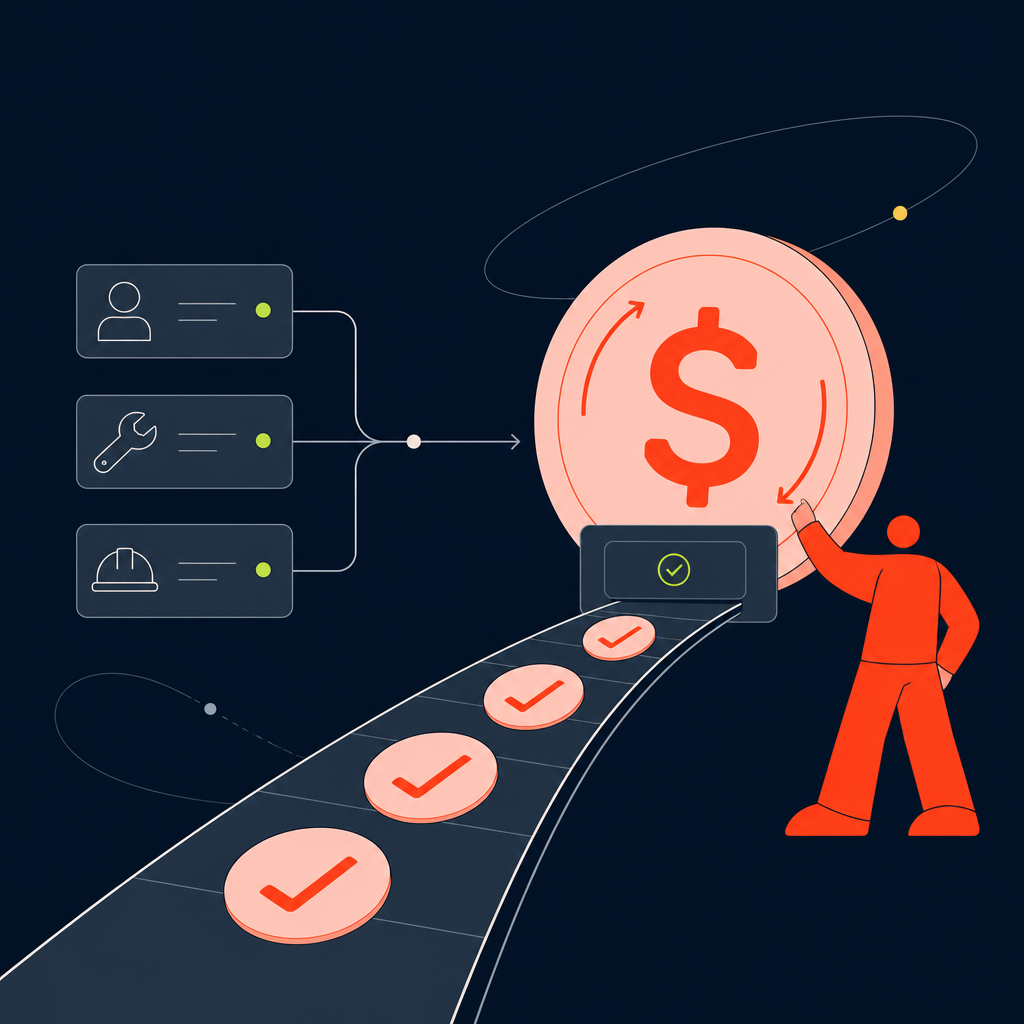
What is an automatic payment in global contractor operations?
An automatic payment is an authorized, schedule-driven electronic transfer that executes recurring payouts without requiring manual intervention for every transaction cycle. In global contractor operations, this mechanism transfers funds from corporate balance accounts to independent contractors according to agreed schedules, milestone triggers, or approved invoices while maintaining continuous compliance validation and treasury controls.
Finance teams operating across multiple jurisdictions often struggle with the manual mechanics of recurring contractor payouts. Managing individual bank wire transfers, uploading disparate batch files into regional banking portals, and manually re-entering payment details creates friction and introduces human error into monthly accounting routines.
Implementing dedicated payment automation changes this operational workload substantially. According to operational benchmarks, structured automated payment systems can reduce the time spent on invoice management from 15-20 hours weekly to under 4 hours by consolidating intake, validation, and disbursement into a unified workflow.
Traditional manual payment processes introduce several failure points into contractor management:
- Manual re-entry of bank routing and SWIFT (Society for Worldwide Interbank Financial Telecommunication) codes across regional banking portals.
- Hidden intermediary bank fees reducing the final payout amount received by contractors.
- Lack of centralized audit logs for finance teams verifying tax compliance.
- Unpredictable settlement windows causing payment delays across time zones.
The misconception of hands-off payment scheduling
A common misconception among operational leaders is that setting up automated payouts means giving up financial control. Some finance managers assume that automated routines act as unmonitored direct debits that execute payments regardless of invoice accuracy or contract terms.
In enterprise contractor operations, automated payment execution relies on continuous policy validation. Payments only initiate when predetermined parameters are satisfied, such as verified deliverables, matching tax forms, and approved spending limits.
Why traditional contractor payment runs break down
As a company expands its international independent contractor network past 50 or 100 workers, manual payment processes suffer operational degradation. Treasury teams find themselves managing separate banking spreadsheets for distinct geographic regions, each with unique settlement timelines and fee structures.
This fragmentation leads to missed payment deadlines, dissatisfied workers, and high administrative overhead. A structured payment architecture addresses these operational breakdowns by establishing a single point of execution for global payouts.

The core architecture of automated contractor payouts
The core architecture of automated contractor payouts relies on integrated identity verification, bank account validation, and programmatically triggered clearing rails. Before disbursement occurs, the payment engine verifies contractor tax documentation and routing details. This automated check ensures that scheduled funds execute securely across local networks without requiring manual administrative intervention on every transaction.
Finance leaders must distinguish automated, scheduled transfers from raw batch files. Raw batch files push static payment instructions directly to a bank without pre-flight checks, leaving treasury teams vulnerable to returned wires and incorrect payment details. Systems built with automated validation layers run checks before releasing funds, which protects corporate balance accounts and gives finance managers direct visibility into workforce obligations. Companies that automate payments save their finance teams 15+ hours per week by removing repetitive data entry, manual re-keying, and invoice chasing.
Systematic contractor payment architectures include four primary components:
- Automated Know Your Customer (KYC) and Anti-Money Laundering (AML) verification during worker onboarding.
- Real-time bank routing and International Bank Account Number (IBAN) format validation prior to batch generation.
- Programmatic batch grouping based on currency rules and disbursement schedules.
- Policy-driven approval controls paired with automated anomaly detection.
Identity verification and bank account validation
Before an automated payment rule can execute, the underlying infrastructure must verify contractor identity and bank details. Compliance checks confirm that beneficiary details comply with regulatory standards before any payout batch is generated for clearing.
Account validation engines check IBAN structures, account holder names, and regional routing codes directly against banking databases. Performing this verification before payment generation prevents execution failures caused by mistyped account numbers or misaligned beneficiary names. When an invalid routing code or mismatched account name enters an unvalidated system, the bank rejects the wire hours or days later. That rejection forces treasury teams into expensive payment recall procedures and manual repair workflows. Pre-clearing verification eliminates these payment returns before money leaves corporate accounts.
Scheduled batch engines and treasury execution
Once verification is complete, the payout system groups approved invoices into structured execution batches according to target payment dates and currency funding accounts. Rather than processing each transaction individually, the payment engine bundles transfers by country and currency. Bundling transactions allows the system to route payments through appropriate local clearing networks, which optimizes foreign exchange (FX) rates and reduces network transaction fees across weekly payout runs.
Treasury leads retain absolute oversight through pre-set approval thresholds and automated notification rules. If an invoice exceeds standard payment limits or triggers an anomaly alert, the execution engine isolates that specific item while allowing the rest of the batch to settle on schedule. This isolation keeps regular contractor disbursements moving without exposing the business to unvetted payout risks.
Key terms in automated cross-border payment operations
Wondering how cross-border payment operations plays out in your countries?
A Papaya specialist can map this to your actual workforce instead of the general case.
Cross-border contractor payment operations rely on specific financial engineering terms to describe how funds move across international networks. Terms like straight-through processing, smart payment routing, payment groups, intermediary bank fees, beneficiary claiming, and value date define the infrastructure that carries money from a corporate balance sheet to an international contractor. Finance teams that master these concepts can evaluate platform mechanics and eliminate unexpected transaction fees across foreign banking jurisdictions.
The following technical terms explain how automated international disbursements operate:
-
Straight-Through Processing (STP): An automated financial transaction workflow that executes disbursements from payment initiation to final settlement without manual human intervention or re-keying of data. In an STP environment, invoice approval in an enterprise accounting platform triggers payment instructions directly to banking endpoints. Removing human re-entry prevents data corruption and eliminates transmission delays between approval systems and clearinghouses.
-
Smart Payment Routing: The programmatic selection of payment rails and banking networks based on destination country, currency, fee structures, and settlement speed to minimize cost and execution risk. Instead of sending every international payout through traditional international wire networks, automated systems evaluate available payout mechanisms such as local ACH networks, domestic real-time payment schemes, or correspondent banking channels. Smart payment routing directs transfers away from international wire networks toward domestic payment systems whenever local rails exist.
-
Payment Groups: Logical batches of contractor payouts grouped by funding source, currency, approval status, or payment date to simplify treasury management and balance allocation. Rather than clearing contractor payments individually as invoices receive approval, systems cluster payments into structured sets. Treasury managers use these groups to execute single bulk funding transactions, which reduces individual transfer charges and aligns currency conversions with scheduled treasury releases.
-
Intermediary Bank Fees: Transaction fees deducted by correspondent banks along the SWIFT network, which reduce the net amount received by the contractor if not properly managed. When money travels between financial institutions that lack a direct bilateral account relationship, third-party correspondent banks handle the clearing steps. Each intermediary institution along the chain deducts a handling charge from the principal transfer amount. This reduces the final payout below the original invoice total unless the paying entity configures fee-handling rules in advance.
-
Beneficiary Claiming: A payment structure where the receiving contractor bears the processing costs, contrasting with sender-paid models where the enterprise absorbs transaction fees. Under SWIFT protocols, beneficiary claiming corresponds to BEN fee instructions, where wire costs and correspondent charges reduce the contractor's payout balance. Under sender-paid structures, the originating business covers all intermediary handling expenses so the contractor receives the exact invoiced figure.
-
Value Date: The specific calendar date on which funds become legally available to the recipient account following bank clearing and FX conversion. Value date determines when interest calculation begins and when a payee can withdraw transferred funds. Differences between payment initiation dates and value dates occur because international clearing networks observe different operational hours, local public holidays, clearing schedules, and central bank settlement cutoffs across time zones.
How automated payment workflows reduce cross-border complexity
Automated payment workflows eliminate cross-border complexity by unifying foreign exchange execution, multi-currency balance management, and real-time transaction tracking into a single interface. Replacing manual bank transfers with licensed domestic clearing access prevents hidden correspondent fees, eliminates manual reconciliation, and guarantees predictable, full-value payouts to international contractors on the agreed land date.
Implementing automated routing across international worker networks yields clear operational advantages:
- Centralized multi-currency funding balances that lock in clear FX pricing.
- Direct access to local clearing networks to bypass SWIFT intermediary fees.
- Real-time milestone tracking accessible to both treasury operators and recipient contractors.
- Automatic ledger synchronization that eliminates end-of-month manual reconciliation drag.
Eliminating manual reconciliation and approval bottlenecks
Manual reconciliation creates significant operational drag for finance departments managing international contractors. Matching individual bank ledger entries against internal purchase orders and contractor invoices requires hours of manual cross-referencing across multiple software tools.
Automating payment execution connects invoice approval workflows directly to treasury disbursements. Operational research indicates that automating payments can lead to a 40% reduction in operational costs and 85% faster payment processing by standardizing data flows between accounting systems and banking networks.
Modern finance operations rely on a centralized contractor payment platform to enforce consistent approval hierarchies and capture complete audit histories automatically. Every status update, from invoice submission to final bank confirmation, is recorded without manual data entry.
Managing multi-currency funding and payment status visibility
Managing payments across multiple national currencies exposes businesses to unpredictable FX margins and timing risk. Traditional bank transfers often convert currencies at retail rates while routing funds through multiple correspondent banks, resulting in delayed delivery and unexpected fee deductions.
Automated payment rails allow organizations to hold balances in key operational currencies and execute local payouts through domestic clearing channels worldwide. Modern workforce platforms support workforce coverage in 180+ countries, allowing finance teams to pay remote contractors in their local currencies without establishing local bank accounts in every jurisdiction.
Real-time payment visibility gives both finance teams and independent contractors complete clarity over transaction status. Automated tracking dashboards notify contractors when funds are dispatched and provide estimated arrival dates, eliminating support tickets related to payment inquiries.
Building a controlled, repeatable payment operating model
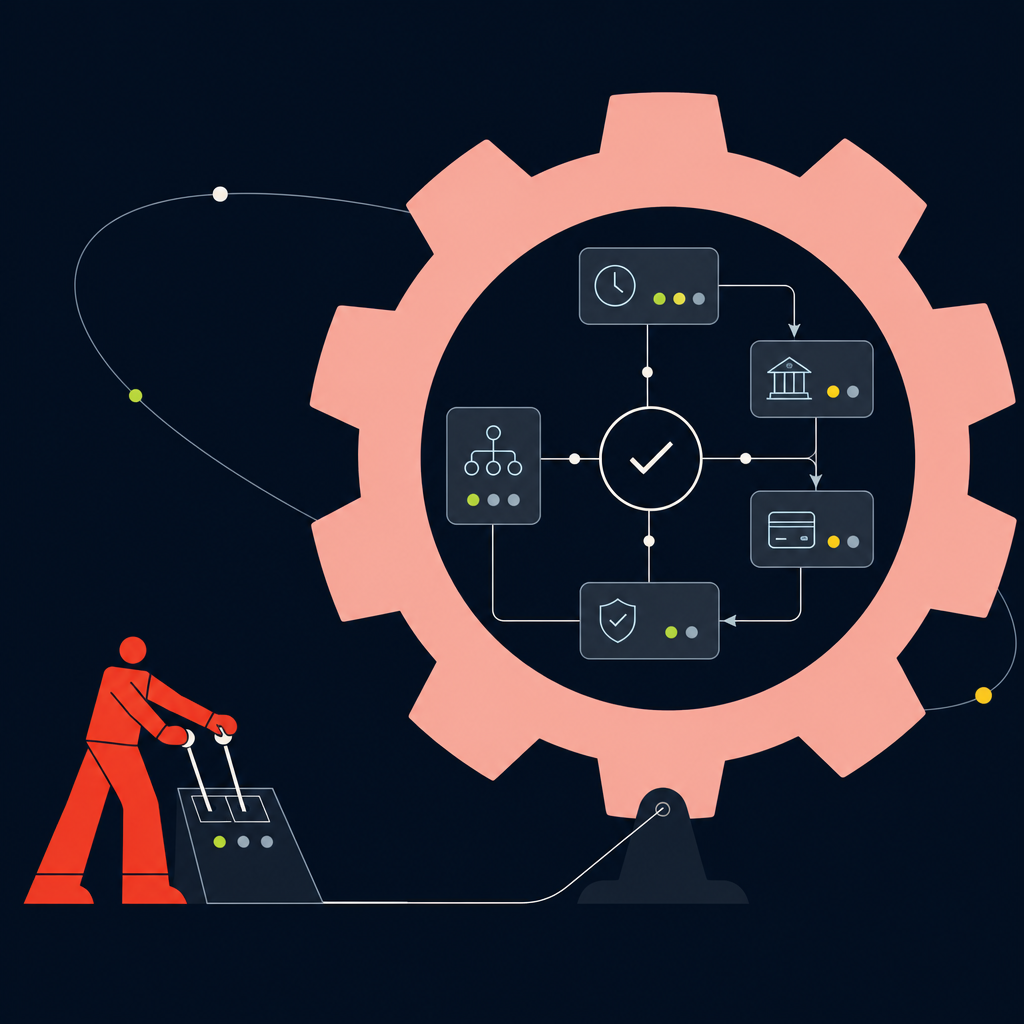
Building a controlled, repeatable payment operating model requires establishing standardized workflows for contractor onboarding, invoice ingestion, approval routing, and mass disbursement. By embedding regulatory compliance and treasury controls into software-driven pipelines, organizations maintain financial control, ensure audit readiness, and guarantee consistent, accurate payouts across every global hiring market.
Finance leaders should establish clear procedural milestones when scaling their payment pipeline:
- Standardize contractor onboarding with mandatory compliance and tax document collection prior to account activation.
- Implement structured payment groups based on internal approval tiers and predetermined funding schedules.
- Connect treasury balances directly to automated payout engines for rapid local clearing.
- Maintain continuous audit trails for every cross-border transaction across all operating entities.
Centralizing control across international payment rails
Fragmented payout processes increase corporate liability, exposure to regulatory penalties, tax non-compliance, and operational inefficiencies. Operating separate payment methods across different regional teams creates blind spots for finance leaders seeking accurate workforce visibility into overall labor expenditures.
Consolidating payment infrastructure into a single operational framework ensures that every contractor payout follows identical verification and approval protocols. This standardization minimizes human error while ensuring that corporate expenditure policies are strictly enforced across all business units.
Establishing audit-ready financial governance
Enterprise organizations that unify their international workforce management achieve substantial operational savings and complete compliance visibility. For instance, in global payroll and employer of record (EOR) consolidation, South Pole consolidated 27 legal entities and 15 payroll providers into one system, saving over 600 hours of manual work per week and approximately EUR 417K annually.
Evaluating an enterprise technology partner like Papaya Global allows finance leaders to extend similar consolidation principles to contractor operations by integrating worker onboarding, compliance verification, and multi-country payments into a single operating model. By implementing a dedicated solution for cross-border operations, businesses own their cross-border payment schedules and gain financial control over foreign exchange conversion, payment timing, and worker compliance.
Finance teams can evaluate how global workforce payment execution works to replace disconnected banking portals with a unified treasury management framework, protecting treasury balance allocations and optimizing workforce management worldwide. Automating global contractor payouts transforms payment execution from a manual bottleneck into a disciplined, compliant operation that safeguards enterprise balances and elevates the talent experience.
Frequently asked questions
How can a company automate recurring contractor payments without losing financial control?
A company can automate recurring contractor payments by implementing policy-driven payment workflows that require pre-approval validation before execution. Modern automation engines maintain strict financial control through role-based access limits, threshold rules, and automated anomaly detection. Research shows that automated payment systems can reduce the time spent on invoice management from 15-20 hours weekly to under 4 hours while preserving complete audit logs for finance leaders.
What should Finance require from international payment processing for a distributed workforce?
Finance teams should require guaranteed execution timelines, transparent foreign exchange pricing, direct access to local payment rails, and integrated compliance checks. High-performance payout systems eliminate hidden correspondent banking fees while accelerating processing speed. Modern automated platforms can deliver a 40% reduction in operational costs and 85% faster payment processing, allowing treasury teams to manage global workforce payments efficiently.
How do automatic payments handle cross-border payments across multiple currencies?
Automatic payment systems manage cross-border disbursements by utilizing multi-currency funding accounts and programmatic FX routing. Instead of performing individual international wire transfers through traditional SWIFT channels, the payment engine converts currency at batch rates and distributes funds through local clearing systems. Leading platforms provide comprehensive international infrastructure with workforce coverage in 180+ countries, ensuring workers receive payments in local currencies.
How can a business reduce cross-border payment complexity and reconciliation drag?
Businesses reduce cross-border complexity by consolidating contractor invoicing, bank verification, and ledger reconciliation into a single software platform. Automating transaction matching against internal accounting ledgers removes the need for manual spreadsheet cross-referencing. By adopting an automated payout architecture, organizations can save finance teams 15+ hours per week, replacing fragmented manual runs with predictable, automated execution.
The next step is cross-border payment operations in your own setup
Bring your countries, worker mix and payment cycles to a Papaya specialist and get a straight answer on what changes.